


Thundercat is one of those freaks who plays on the highest level of musical proficiency and technique while also being a pop icon. And he’s even more of a freak because he’s also genuinely hilarious. And he’s genuinely hilarious because he’s genuinely fucking weird. All of this combined makes him, imho, one of the most important and innovative artists making music right now.
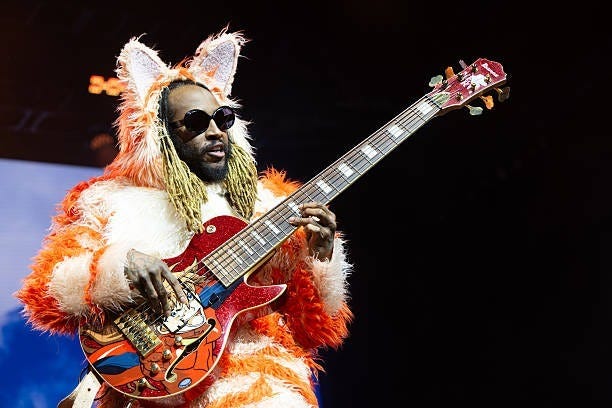
His latest album, Distracted, hit streamers on April 3rd, 2026– exactly six years after his last album, It Is What It Is. As usual, it’s full of amazing collaborations with other artists, including the late Mac Miller on what just so happens to be my favorite track.
If you are not yet familiar with Mr. Thundercat (it’s just Thundercat, but I like adding the Mr.), he is a universe unlike any other universe. This album lets us see into that universe a little more.
Listening to Distracted is Like Waking into a Dream
The first three chords of the album’s opening track, “Candlelight”, float down like a feather: F#maj9, F#m11, Em7. They deliver you into the jazzy, vibey, sometimes seemingly disjointed dreamscape of Distracted.
The vocal on “Candlelight” is essentially doubled, with Thundercat singing the low part and (I believe) jazz vocalist Juliane Gralle singing (mostly) in unison an octave up. This octave doubling creates an almost robotic vocal, which works well for one of the album’s main themes: being distracted by technology.
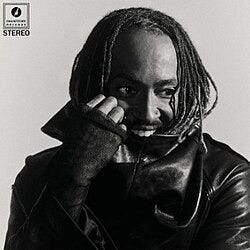
Track #2, “No More Lies”, is a collaboration with Tame Impala. It has that undeniable spaced-out synth Tame Impala sound while still being very much a Thundercat song. Both artists take turns singing the verses, and the song stays danceable without losing its dreamy texture.
In the song’s last minute, Stephen Bruner (Thundercat) talks as if he’s recording a voice memo, saying things like: “I tell you the truth because I care, but I also lie to you because I care…” It becomes a slightly rambling thesis statement for the album.
The danceability keeps rising on “She Knows Too Much”, a collaboration with Mac Miller (R.I.P.). Besides being my personal favorite, it’s probably the funkiest track on the album, with a walking bass line and New Orleans-style horns. The music video is an experience too:
On “I Did This To Myself”, Thundercat’s elite bass playing shines, especially in the intro. The lyrics are very Thundercat-esque too: romantic disappointment, unrequited love, obsessive longing. It’s another collaborative track, this time with Lil Yachty, and one of the only songs on the album produced by Flying Lotus, Thundercat’s longtime collaborator.
Next up is “Funny Friends” with A$AP Rocky, whose laid-back delivery fits perfectly with the track’s layered synths and repetitive vocal hook. Then comes “What Is Left To Say” with The Lemon Twigs, whose Beach Boys-meets-early-Beatles harmony style somehow transforms into this delightful bossa nova yacht rock hybrid in Thundercat’s universe. The chorus is lush and beautifully harmonized, with the D’Addario brothers and Thundercat all singing together.
The next three tracks, “I Wish I Didn’t Waste Your Time”, “Anakin Learns His Fate”, and “Walking on the Moon”, leave Thundercat to his own devices. It gets weird in the best way: contemplative, stream-of-consciousness, jazzier, dreamier. These songs feel like he’s trying to work something out. Lyrics like “You gotta know the lines, to know just where to draw them” hint at what that might be.
After all that reflection, we move back into a sexy dance track with Channel Tres that might have the best bass line on the album. The next track, “ThunderWave” with WILLOW, is an epic love song with big 80’s-style production, hand drums, water sound effects, and incredible jazz solos cradled in the middle.
The final stretch returns to solo Thundercat. “Pozole” is a sweet piano ballad built around the hook: “Am I asking too much? Do you understand? I can only show you exactly who I am.” Then “A.D.D. Through the Roof” opens with a killer Rhodes-and-bass intro before expanding into a dense but groovy jazz track with Thundercat soloing all over it.
“Great Americans”, the penultimate track, feels lyrically like a diary entry about needing to “rein it in”. Beneath it, the music sounds like jazz thinking out loud: rhythmic enough to move to, but constantly shapeshifting.
The final track, “You Left Without Saying Goodbye”, continues that stream-of-consciousness energy with lines like: “Maybe I should start an OnlyFans and show some feet.”
If “Candlelight” lets us wake up inside the dream of the album, the final track slowly wakes us back into life.
Thundercat Made an Album About Distraction Through Real, Live Interaction
Working closely with producer Greg Kurstin, Thundercat emphasized live musicianship throughout the sessions. In interviews, he spoke about wanting to preserve “the beauty of musicality and being a musician,” describing several tracks as being recorded live in the room with players reacting to one another in real time.
You can hear that looseness throughout the album. The drums breathe instead of snapping rigidly to a quantized grid. Keyboard voicings swell and decay organically. And, even with the album’s overall polished quality, tiny imperfections remain intact.
That choice matters because Distracted is not simply an album about distraction, it is an album about attention. At a moment when so much popular music is engineered for frictionless consumption, Thundercat seems increasingly interested in texture, instability, human interaction, and the inevitable but necessary disappointments of human interaction.
Even the album’s guest features don’t feel like celebrity showcases: Thundercat the chameleon shifts the album’s mood to truly collaborate with each of them.
Thundercat Still Believes in Real Musicianship: That is Gadfly.
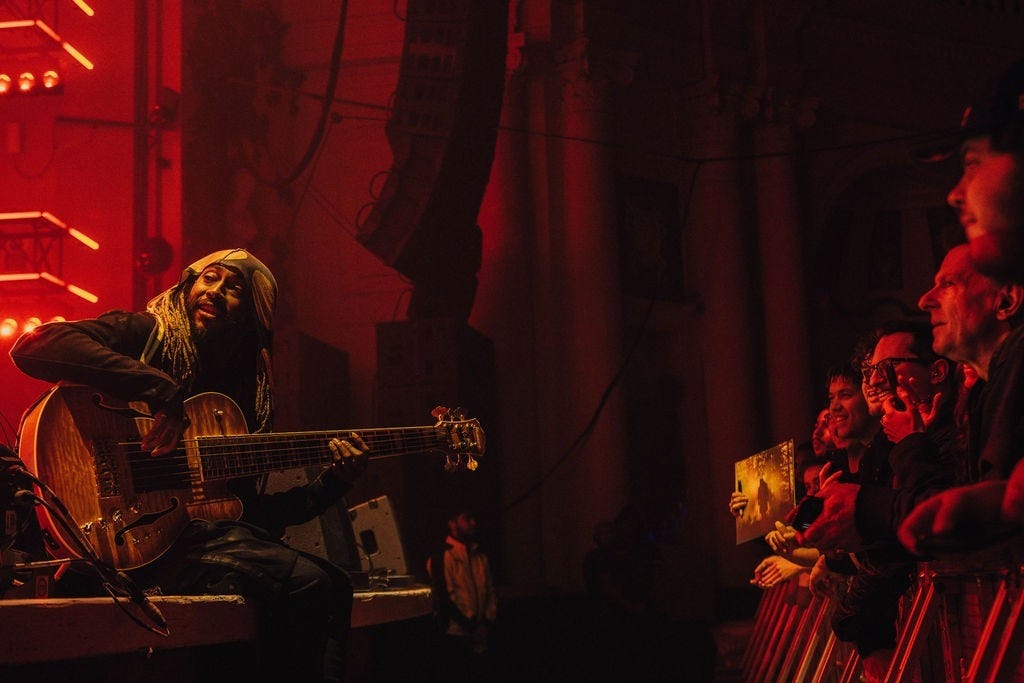
For all its thematic concern with fragmented attention, Distracted never sounds cynical. Actually, it is mostly very tender and reflective, even positive at times. The live ensemble playing gives the record a warmth that prevents it from becoming emotionally cold or conceptually rigid.
Thundercat may be singing about disconnection, overstimulation, and exhaustion, but he answers those conditions with actual musicians in a room together, listening carefully to one another.
In an era optimized for distraction, Thundercat insists on the value of attention, reflection, and interaction.
Just because, here is one of his videos from a few years ago, again featuring a bunch of other artists. That’s how he does.
He’s very unique in this era. A 70’s throwback in the best way.