

Lillian Enters onto the Scene
The birth of a gadfly like Lillian Hellman started simply enough in New Orleans, Louisiana. Born into a Jewish home, her parents pursued common paths in life. Her mother was a homemaker, and her father was a shoe salesman. Yet the wealth in her extended family allowed her to surpass this upbringing and the typical mold of a Jewish person or even a woman at that time. Lillian attended elite boarding schools as a child before continuing her education at New York University and Columbia University. These experiences led her to Europe where she kept studying as well as immersing herself in the political and social transformations taking place around the continent and the world. This brought her into contact—that often led to romantic as well as friendly relationships—with prominent figures and organizations within the burgeoning movements of fascism and communism, including many from Hollywood.
Following these experiences, Lillian started a writing career in the 1930s. It did not take long before she found success creating plays, and some that drew the most attention and critical acclaim included The Children’s Hour, The Little Foxes, The Autumn Garden, and Toys in the Attic. The applause that these works garnered allowed Lillian to travel to Hollywood and begin working on movies.
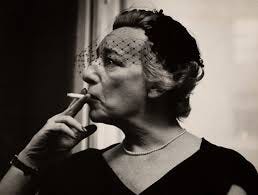
She started at the bottom. MGM hired her to read and summarize books and other writings. Though modest, this job introduced her to important people in the film industry like Dashiell Hammett. Eventually, this networking and her hard work plus skill finally cracked open doors for her career. She started drafting screenplays and collaborating on significant silver screen projects such as The Dark Angel, The Children’s Hour, and Dead End, among many others spanning the 1930s, 1940s, and beyond. Down the road, her work and the notoriety it produced, combined with her controversial associations and opinions, would land Lillian in seriously hot water, but others were suspicious of her long before that.
Clouds of Suspicion Form
The first sign that Lillian Hellman harbored communist sympathies stemmed from her public statements and perceived socialist bent in her work. In the early part of 1937, she and nearly one hundred other important American leaders signed and distributed a document known as “An Open Letter to American Liberals.” This letter appeared to support the Soviet Union and call for others to allow them to defend themselves. In response to critics’ attacks on her motives and words, Lillian replied that she was merely affirming the Soviet Union’s right to protect its national sovereignty. However, she also suggested a Realpolitik approach by implying that a propped-up, fledgling Soviet Union could better fight back against the growing fascist menace. Lillian encouraged others to focus on this threat rather than the controversial nature of the letter.
Yet, commie hunters did not stop there and scrutinized her past work as reaffirmation of her communist loyalties. To this end, they pointed to Days to Come, Watch on the Rhine, and The Searching Wind. Frequently, these plays had anti-fascist, pro-labor, or anti-conformist views and storylines. On the other hand, none of them overtly endorsed communism or socialism.
However, critics persisted like a dog on the hunt. They circled her personal relationships and organizational ties to further enforce their allegations that Lillian Hellman was a closeted-Red. In particular, her on-again, off-again romance with blacklisted writer and activist Dashiell Hammett raised eyebrows of those already concerned. Lillian’s own comments about going to meetings tinged with socialism—that she was “a most casual member” of the Communist Party for a time—did not help her escape the spotlight either. Her association and involvement with left-leaning groups like the Screen Writers Guild and League of American Writers seemed to make the slam dunk case for anti-communist hardliners.
Unfortunately, Lillian’s subsequent actions only made things worse. Early in 1947, she turned down a contract from Columbia Pictures because a clause required her to state she had never been a member of the Communist Party and that she would not associate with subversives. Aside from forcing her to end relationships with friends and lovers that had these views, Lillian thought this clause violated her constitutional rights. She refused to sign.
Later that year, Congress jumped into the fray and resurrected the House Un-American Activities Committee (HUAC). They charged after Hollywood and demanded it name names and rat on their colleagues who had socialist or communist sympathies. Lillian was a part of a group – known as the Hollywood Ten – that did not go along with this congressional investigation. While standing up to Congress, she implored others to do the same when she said:
“They frighten mighty easy, and they talk mighty bad. ... I suggest the rest of us don’t frighten so easy. It’s still not un-American to fight the enemies of one’s country. Let’s fight.”
How nasty! This conspicuous and public objection sheds a lot of light not just on her motivations but also her personality and possibly her character. It cost her though, and she was blacklisted like the rest. Major directors stopped working with her because of her political protest. This made her a prime target for accusations and suspicion as future waves of communist hysteria rolled through America.
The Shape of a Leader
The nation got commie crazy again in the early 1950s. Joe McCarthy, embittered at his lack of success after many failed stunts, launched a witch hunt with lies to go after boogeyman. Following his lead, Congress pulled out some of their favorite punching bags, namely Hollywood and once again, Lillian Hellman. She would be waiting for them.
Lillian had already tussled with them before in preceding rounds of questioning in the late forties when the House was trying to get her to name names. Also, in a more personal controversy, the government denied her application for a passport earlier in that decade. The government did this because they considered her a working Communist. Although not long after this adjudication, the Department of State reversed its ruling and awarded her a passport. However, Lillian’s tangled history with the red web of communism and previous battles with the House Un-American Activities Committee that got her blacklisted in the first place put her high on Congress’ Most Wanted List when it revved up again at the urging of “Tail-Gunner Joe” McCarthy.
In 1952, HUAC subpoenaed Lillian Hellman to appear and testify. As they did before, the committee wanted her to swear under oath and in public to the communist activities and beliefs of her and her friends. As she did before, Lillian objected to the notion of ratting out her friends. In a famous letter she sent to Congress outlining her reasons for refusing their demands, she suggested that humanity should trump politics when she wrote the following:
“I do not like subversion or disloyalty in any form and if I had ever seen any I would have considered it my duty to have reported it to the proper authorities. But to hurt innocent people whom I knew many years ago in order to save myself is, to me, inhuman and indecent and dishonorable.”
This was not enough for her. She went on to strike at the heart of the American Inquisition itself, erected and employed to gut our rights in the guise of security. Lillian did this later in that same letter when she said, “I cannot and will not cut my conscience to fit this year’s fashions…”
Lillian had more in store for HUAC than these nasty words though. She showed up and stared down Congress right after delivering this message to them. The baffled, blustering committee members could barely muster any questions at all for her. Lillian was dismissed without any penalty.
Her famous words and public stand shielded American democracy from the cutting winds of megalomania. Zooming out from the fight she picked with Congress, we see more than a modern retelling of David versus Goliath. We see a gadfly buzzing around the US government and refusing to bend, break, or go away. Further still, we see her punching back. How nasty and thank goodness she did! We must wonder where those nasty flies hover now that will fight back like Lillian did, especially when one flies around the world and sees power run amok. They might seek encouragement and ammunition in the words she used and the life she lived.
If you like this, follow me on Bluesky for more musings @chibillyob.bsky.social or on Substack Billy O’Brien