

Exiting the Second World War, American society exploded with confidence. Roads emerged and veined the country, allowing new cities to blossom and spread across the national landscape. Families popped up inside them as flowers do in spring, and they were filled and shined brilliantly with hope and possibility. Prosperity and peace soon followed as more people earned college degrees, owned homes, and voted.
However, the season quickly changed—as they typically do—to fall, and more ominous characters emerged onto the American stage: fear, paranoia, and communism. Gone were the days of fearing Nazis and Fascism as those threats were completely and utterly dispatched. Unfortunately, as those villains disappeared, others dramatically arose in our consciousness. In fact, these were friends turned foe because communists (or commies as the less “verbose” liked to and typically did call them) helped us defeat our dreaded Fascist enemies in WWII. They really posed no threat to our shores or souls due to their limited resources and demolished states in the aftermath of the prolonged fighting. This was true except for one thing: the spread of their ideology.
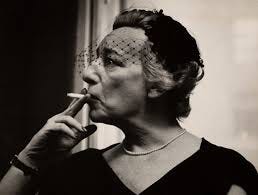
Like the Salem witch trials, as Arthur Miller described them, many Americans began to look over their shoulder and fear that their neighbor, coworker, or even their friend, could be poisoned or already had been poisoned with the mere idea of communism. This posed an existential threat to their whole existence within the confines of democracy and capitalism. Other events made this terror seem even more genuine and catastrophic.
First, the Soviet Union was actually taking over countries and a bunch of them in the 1940s: Bulgaria, Poland, Hungary, Czechoslovakia, and a whole swath of Germany. Second, China itself fell to communism in 1949. Third, in that same year, the Soviet Union conducted its first test of a nuclear weapon: they got the bomb. Fourth, events at home—including the infamous Pumpkin Papers incident and subsequent conviction of Alger Hiss whom many presumed to be a spy—convinced many Americans that Soviets were actively infiltrating and spying on Americans in order to blot out the white and blue of this country, and make it all red. This fever turned into a frenzy with the highly publicized trial and eventual executions of Julius and Ethel Rosenberg. The pair were executed on the same day for attempting to pass atomic secrets to the Soviet Union during a Cold War that many feared would heat up soon. Fifth, the government itself was talking tough on communism by spouting the ideas of containment and other passive aggressive foreign relations slogans as well as acting tough on communism by beefing up our military might and putting the alpha in our alphabet organizations and alliances (C.I.A., D.O.D., N.A.T.O., E.T.C. GET. THE. POINT.?). In a nod to the growing anti-communist sentiment spreading throughout the nation, the Democratic President Harry Truman even demanded loyalty in new programs for federal workers and constructed a subversives list for the Justice Department to monitor. These and other developments gave the green light for many reasonable Americans to worry about the threat of communism at home and abroad.
None jumped in and capitalized off this latent state of paranoia more than Joe McCarthy. Even before this era, though, he had already displayed a side of himself more focused on power than principle. Nearly twenty years before his entrance into the limelight, he dispatched with his allegiance to the Democrat Party in favor of the Grand Old Party for nothing more than convenience. Later, while serving in war, he attempted to exaggerate his service record in order to further his electoral ambitions. Then, once he was finally elected to office, but frustrated over his political position in D.C., he initiated an inquisition of lies to bolster his power.
The day on which he unleashed this fury began like any other one, but America would soon find itself unwillingly on the roller coaster of this man’s demented mind. Joe was set to give a speech at a hotel in Wheeling, West Virginia. Out of nowhere, except maybe the annals of his insecurity and frustration, Mr. McCarthy announced the following:
“I have here in my hand a list of 205 . . . a list of names that were made known to the Secretary of State as being members of the Communist Party and who nevertheless are still working and shaping policy in the State Department. . . . As you know, very recently the Secretary of State proclaimed his loyalty to a man guilty of what has always been considered as the most abominable of all crimes—being a traitor to the people who gave him a position of great trust—high treason. . . . He has lighted the spark which is resulting in a moral uprising and will end only when the whole sorry mess of twisted, warped thinkers are swept from the national scene so that we may have a new birth of honesty and decency in government.”
The very next day, at an event in Salt Lake City, he backtracked and reduced the number to fifty-seven. When pressed in the Senate to bolster his claims of communism, he produced only outdated and specious evidence. However, he persisted in repeating these claims and hammering the subject for years despite never offering any evidence to support his inflammatory accusations. This produced another and possibly more profound wave of hysteria in the United States.
Yet, this was not the first time that madness like this sprung up in America. Congress itself had established a committee (House Un-American Activities Committee or HUAC as it was commonly known) to sporadically investigate subversive and disloyal elements in public workers and private citizens, especially related to communism and the rise of the Soviet Union. They had even set their sights on Hollywood in the late forties. Their modus operandi was to try and get people to rat on their friends and coworkers (to “name names” as it was referred to from the common plea of Congress towards their deponents). Elia Kazan was one of the most famous people to name names.
On the other hand, many brave citizens failed to comply with these demands. They cited their Fifth Amendment right against self-incrimination in order to shield themselves and others from this persecution. They were derided and called Fifth Amendment Communists in the media and public. The consequences of this action were severe for protestors, though, because many were blacklisted and barred from working. This list of nonconformists included several prominent stars of the silver screen such as, but not limited to, the following: Charlie Chaplin, Arthur Miller, Dalton Trumbo, and Pete Seeger.
Determined to be the next profiteer of panic, Joe McCarthy kicked off a similar witch hunt in his role as chairman of the Permanent Investigations Sub-Committee of a Senate Committee on Government Operations. In this position, he targeted his attacks first on the Department of State. Specifically, he claimed the Secretary of State, Dean Acheson, was giving shelter to communists. Then, McCarthy pointed to the Department’s Voice of America program as well as certain books housed in its libraries as giving credence to communist influences and the spread of this ideology. The Department of State quickly denied these assertions and, in a cowardly act of censorship, began removing the books that Joe complained about from their facilities.
These actions and the newly incensed public inspired the House to take up action themselves, again through HUAC. Predictably, they circled back to one of their most common targets of opprobrium: Hollywood. Dramatically, Congress would find that one of its strongest and nastiest critics was an actress named Lillian Hellman. Again, the world would watch a determined individual stand barricade to a locomotive of authority speeding in the wrong direction.