

Welcome to Gadfly City: The Capital of Weird. Please subscribe for more weird tales and enjoy these episodes of gadflies across Illinois.

Living Among the Problem: Jane Addams and the Refusal of Indifference
Compassion wasn’t enough. She made it political.
A City That Chose Not to Look
Turn-of-the-century Chicago liked to present itself as proof that modern America worked—its stockyards feeding the nation, its rail lines stitching the continent together, its skyline announcing wealth as destiny. But the machinery of that success ran on lives kept deliberately out of view. By 1900, nearly four out of five Chicagoans were immigrants or the children of them, many crowded into West Side tenements where entire families shared a few rooms and sanitation lagged far behind growth.
The same economy that celebrated expansion relied on child labor to keep it moving—thousands of children working long hours in factories, canneries, and sweatshops because wages from adult labor weren’t enough to survive. In places like the Union Stock Yards, workers labored in dangerous conditions for low pay, injuries common and protections minimal, their expendability built into the system that called itself progress.
Jane Addams didn’t misread this as an unfortunate side effect. At Hull House, founded in 1889, she and her colleagues documented what the city preferred not to see—mapping wages, housing conditions, and labor patterns to show that poverty wasn’t accidental, it was organized. Settlement work became evidence. Evidence became an argument. And the argument was simple enough to be disruptive: if prosperity depends on invisibility, then making people visible is already a form of resistance.
She rejected charity as a sufficient response and dismissed the idea of poverty as personal failure. To her, it was structural—built into wages, housing, education, and policy. That meant it could be dismantled. But only if someone was willing to look directly at it.
Close Enough to See Clearly
Addams didn’t theorize inequality from a distance. After studying in Illinois and traveling through Europe, she encountered a different model: live where the problem is. Not above it. Not outside it.
Proximity changed everything.
Poverty stopped being abstract. It became specific—crowding, language barriers, unsafe work, limited access. Problems with causes. Causes with accountability. That realization drew a line: charity maintains hierarchy; reform challenges it.
Hull House: Reform, Not Relief
In 1889, Addams co-founded Hull House in the middle of an immigrant neighborhood—not as an escape from the city’s problems, but as an immersion in them. It offered childcare, education, job training, and cultural programs. But its real function was sharper: it turned lived experience into evidence.
Addams lived there. She observed, listened, and documented. She saw how systems—not individual choices—produced hardship. Hull House became both a community center and a case against the status quo. And it spread. Other cities followed. The model worked because it refused distance.
At Hull House, the work was never limited to services—it was structured as observation with consequences. Residents didn’t just offer classes or childcare; they recorded who came, what they needed, how often they returned, and why. Out of that accumulation came the Hull House Maps and Papers, a detailed study of wages, nationalities, housing density, and working conditions in the surrounding blocks. It made something visible that the city preferred to treat as incidental: poverty followed patterns. It clustered around low wages, unsafe labor, and overcrowded housing. What looked like individual hardship, mapped carefully enough, became systemic evidence.
The house itself blurred categories that institutions kept separate. It functioned as a kindergarten, a night school, a public kitchen, a labor bureau, and a cultural center, but also as a meeting ground where reformers, workers, immigrants, and policymakers occupied the same rooms. Addams and her colleagues hosted lectures, organized clubs, supported unions, and helped push for labor protections—especially around child labor and workplace safety.
This wasn’t charity in the traditional sense. It was proximity used as leverage. By staying embedded in the neighborhood, Hull House collapsed the distance between those experiencing conditions and those with the power to change them.
What emerged from Hull House didn’t stay contained there. Its model—live in the community, document conditions, connect service to reform—spread to other cities and helped shape early social work and urban policy. More importantly, it altered the terms of the conversation. If the dominant narrative framed inequality as inevitable, Hull House produced a counter-record grounded in daily life. Not abstract critique, but documented reality. It didn’t argue from ideology. It argued from what could be seen, counted, and heard—until ignoring it required effort.
The Agitation Was the Point
Addams didn’t stop at service. She translated what she saw into critique. She backed labor unions. Opposed child labor. Demanded sanitation, education, and workplace protections. She wrote and spoke relentlessly, connecting everyday suffering to policy decisions. This made her inconvenient. She wasn’t just helping people survive the system—she was questioning why it worked that way at all. That’s what made her a gadfly: persistent, grounded, and difficult to dismiss.
Pushback Was Inevitable
Pushback was inevitable. Business leaders called her unrealistic. Politicians called her disruptive. Others wanted her to stay in her lane—help quietly, don’t challenge power. She refused. As Jane Addams put it, “The good we secure for ourselves is precarious and uncertain until it is secured for all of us and incorporated into our common life.” The statement reads like a principle, but it functioned as a critique—of systems that depended on uneven protection and called it progress.
To treat symptoms without confronting causes, she argued, is to participate in the problem. Even her pacifism during World War I followed that logic: violence, like poverty, was not inevitable—it was chosen. That insistence drew sharper criticism. She was labeled unpatriotic, naïve, out of step.
But Addams didn’t retreat into neutrality. “Nothing could be worse than the fear that one had given up too soon, and left one unexpended effort that might have saved the world.” Others were less generous in their framing—Theodore Roosevelt dismissed her as “a professional pacifist,” the kind of figure easier to caricature than to answer. The friction was the point. Addams kept pressing where it was uncomfortable, where consensus broke down, where the gap between what the country said and what it did became hardest to ignore.
What Lasted
Jane Addams helped shape modern social work, but her real contribution was methodological: live close, observe honestly, and connect individual hardship to systemic design. That approach didn’t stay theoretical—it moved through people. Florence Kelley, who lived and worked at Hull House, carried it directly into labor reform, insisting, “We have a right to protect our children against those who would use their labor for their own profit.” The claim echoes Addams’s premise: proximity produces evidence, and evidence demands intervention.
The influence widened as others adapted the method to different fronts. Frances Perkins, who encountered settlement work early in her career, translated that same logic into policy, later writing, “The people are what matter to the government, and a government should aim to give all the people under its jurisdiction the best possible life.” The language is administrative, but the structure is familiar—lived conditions first, systems accountable to them.
Addams’s legacy, then, isn’t just a set of reforms; it’s a way of working that refuses distance. Where her influence holds, aid doesn’t stand alone—it points somewhere. It asks who benefits, who absorbs the cost, and why the pattern repeats. That’s the through line from settlement house to labor law to modern social policy: attention, made deliberate enough to become pressure, and pressure sustained long enough to produce change.
Refusal as a Starting Point
Jane Addams understood something uncomfortable: compassion alone can become a form of avoidance. It soothes without changing anything. She insisted on more—live among the problem, name it clearly, challenge what creates it. Not because it’s easy, but because indifference is easier, and far more dangerous. At Hull House, that refusal took form in practice.
By the early 20th century, the settlement had grown into a complex of more than a dozen buildings serving thousands each week through classes, childcare, labor support, and cultural programs. It wasn’t peripheral work—it was constant, structured, and visible.
The impact didn’t stay inside its walls. Hull House residents helped document urban poverty in ways that shaped public understanding, contributing to reforms in child labor laws, workplace safety, and juvenile courts—Chicago’s juvenile court system, established in 1899, emerged directly from this reform network. The model itself spread nationwide, influencing the development of settlement houses across major American cities and helping lay the foundation for modern social work as a profession.
What lasted wasn’t just the scale, though that mattered—it was the shift in expectation. Hull House demonstrated that proximity could produce evidence, and that evidence could drive change. Tens of thousands passed through its programs over decades, but the larger legacy is harder to count: policies altered, professions formed, and a standard set—that social reform requires more than care. It requires confrontation, sustained and specific, with the systems that make care necessary in the first place.

Listening as Resistance: Studs Terkel and the Voices That Made a City
He didn’t speak for people. He made sure they were heard.
A City Full of Noise—and Selective Memory
Chicago has never lacked voices. Industry, migration, ambition—its history is loud with them. But volume isn’t the same as visibility. For most of American history, only certain voices counted. Politicians, executives, cultural elites—their perspectives became “history.” Everyone else was context. Background. Omitted.
Studs Terkel treated that not as an oversight, but as a failure of attention. He understood something simple and disruptive: a city isn’t defined by its official narrative. It’s defined by the accumulation of lived experience—most of it unrecorded. His work was built on correcting that imbalance, one conversation at a time.
Listening as Method
Though born elsewhere, Terkel was shaped by Chicago—its neighborhoods, its contradictions, its constant overlap of lives that rarely appeared in the same story. He found his medium at WFMT, where he hosted long-form radio conversations that resisted speed and simplification. No soundbites. No rushed conclusions.
He let people talk. That restraint was the method. Terkel didn’t extract information; he created space. Interviews weren’t performances or interrogations. They were collaborations—structured around curiosity rather than authority. The result felt different because it was different. Terkel believed people weren’t translated into narrative. Rather, he felt they spoke for themselves. He notes this when he says, “I want to show that ordinary people are extraordinary.”
History Without Permission
Terkel carried that approach into his books, most notably Working and Hard Times. They didn’t read like traditional history. No central protagonist. No single argument imposed from above. Instead: a chorus. In Working, people described their jobs—not in economic terms, but in lived ones. Routine, frustration, pride, boredom. The texture of labor that statistics erase. In Hard Times, Americans recalled the Great Depression—not as a single story of collapse, but as thousands of individual negotiations with survival. This wasn’t just stylistic. It was structural.
Terkel challenged the idea that history belongs to those who interpret events from a distance. He treated lived experience as expertise. Not anecdotal. Authoritative. That shift redistributed something important: who gets to define reality.
The Disruption Was Quiet—but Real
Terkel didn’t organize protests or draft policy. His disruption was subtler. He paid attention—to the people that institutions ignored. By foregrounding workers, immigrants, and the economically marginalized, he exposed gaps between national narratives and lived reality. Work wasn’t always dignified. Opportunity wasn’t evenly distributed. Progress wasn’t universal.
And he didn’t argue this in theory. He let people say it themselves. That made it harder to dismiss. He became a cultural gadfly not by attacking power directly, but by undermining its assumptions. If the dominant story says everything works, and hundreds of voices say otherwise, the story starts to fracture.
Skepticism and Dismissal
Not everyone accepted his approach. Critics questioned oral history itself—memory is unreliable, subjective, inconsistent. Terkel noted, “Memory is the diary that we all carry about with us.” Others dismissed his subjects as ordinary, as if that disqualified them from significance. Terkel didn’t engage the criticism head-on. He outpaced it. More interviews. More voices. More accumulation.
The argument became quantitative as much as qualitative: at what point does lived experience stop being anecdotal and start being undeniable?
What He Changed
Terkel didn’t invent listening, but he made it consequential. His influence runs through modern documentary work, especially in podcasts and long-form journalism that prioritize voice, depth, and narrative ownership. The format has evolved. The principle hasn’t.
Let people speak. Then take them seriously. His work also expanded the historical record. Not by replacing existing narratives, but by complicating them—adding voices that force a broader, less comfortable understanding of American life.
Attention as Resistance
Terkel’s core idea was easy to overlook because it looked so simple. Listening is not passive. Done properly, it redistributes authority. It challenges who gets believed, who gets remembered, and who gets to define reality. In a culture that prioritizes speed, certainty, and control over narrative, that kind of listening becomes disruptive. It slows things down. It introduces contradiction. It refuses clean conclusions.
The Work That Remains
Terkel didn’t resolve the tension between official history and lived experience. He exposed it. The question he leaves behind is practical: who are we still not listening to? Because omission is rarely neutral. It shapes what we think we know. Terkel’s answer was consistent—go closer, listen longer, record what’s there. Not to romanticize it. Not to tidy it up. To make it harder to ignore.
Listening, Taken Seriously
Studs Terkel didn’t position himself as the authority. “I’m not a historian. I’m a listener,” he said. He shifted authority outward. That’s what made his work last. Not the format. Not the platform. The insistence that ordinary lives are not background material—they are the substance of history. And that paying attention, sustained and deliberate, is not just an act of empathy. It’s an intervention.
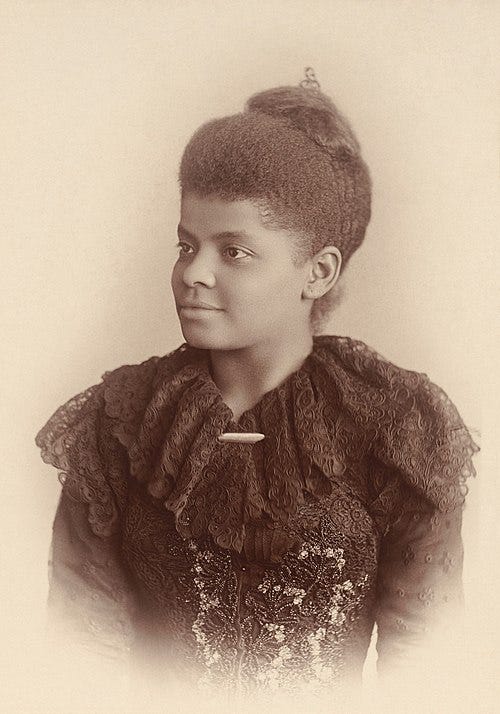
Writing Against Silence: Ida B. Wells and the Exposure of American Violence
How investigative journalism became a force for truth, dismantling myths about lynching and reshaping the American fight for justice
A Pen Against a Nation
Nations can learn to look away from their own violence, dressing brutality in euphemism, calling it justice, calling it order, calling it necessity. The United States did exactly that in the nineteenth century when it built a culture of silence around lynching, one that depended on myth as much as fear. Ida B. Wells, a seemingly powerless woman, stepped into that silence by taking up her pen, one sharpened by precision and moral clarity. Wells refused the comfort of distance, naming what others avoided. She insisted the truth, written plainly enough, couldn’t be ignored forever. Wells transformed journalism into a weapon for social justice, wielding investigation and language as tools to confront both public lies and private indifference.
From Enslavement to Awakening
Her authority didn’t emerge from abstraction, but instead was shaped by proximity to injustice. Born into slavery in 1862 Mississippi, Ida B. Wells’ life began in bondage, unfolding in its long shadow. She entered a world already structured against her, where freedom, once declared, remained uneven and fragile. The end of the Civil War didn’t dissolve the conditions that made violence possible; it merely altered their form. Wells grew up in Reconstruction-era South, where equality was promised but instability was instead delivered, where Black advancement was often met with swift and brutal resistance.
For Wells, education was a refuge and an instrument. She pursued learning with determination, eventually becoming a teacher, which offered stability but also exposed her to the limits placed on Black professionals. Even in the classroom, where knowledge should have functioned as an equalizer, the realities of race dictated opportunity. It wasn’t only her professional frustration that pushed Wells toward activism. It was loss—sudden, unjust, and personal.
Three of her friends were lynched in Memphis, which marked a turning point for her. They were no longer anonymous victims, but men she knew who’d had their lives erased under the pretense of justice. Their deaths revealed what polite society refused to admit: lynching wasn’t a response to crime but a tool of control, used to enforce racial hierarchy and suppress Black success. Grief hardened into resolve. Wells began to write, not simply to mourn, but to expose.
Journalism as Resistance
In an era when newspapers shaped public perception, Wells understood the power of print. She became co-owner and editor of the Memphis Free Speech, using its pages to challenge narratives that sustained racial violence. While other publications repeated rumors and other institutions obscured, Wells investigated and clarified. Rather than rely on vague accusations, Wells’ reporting was grounded in data, documented cases, and intentional patterns.
Wells dismantled one of the most persistent myths used to justify lynching: the claim it protected white women from Black men. Through careful analysis, she demonstrated that many victims had committed no such crimes, and accusations were often fabricated or exaggerated to rationalize economic or social retaliation. Her work replaced myth with evidence, forcing readers to confront the gap between what they’d been told and what was true.
This wasn’t journalism as neutral observation, but as intervention. Wells didn’t pretend objectivity required silence in the face of injustice. Instead, she argued, through both method and tone, that truth itself was a form of advocacy. To document violence accurately was to challenge systems dependent on distortion.
The consequences were immediate and severe: a mob destroyed her office and threats against her escalated. Although remaining in Memphis was untenable and Wells was forced into exile, she didn’t allow herself to be silenced. Instead, she expanded her audience.
Exile and Expansion
Just because Wells left the south, she wasn’t leaving the fight. She took her work north, bringing with her the evidence she had gathered, along with a sense of urgency toward enacting change. She lectured across the United States, disrupting the illusion that lynching was a regional problem, arguing that silence outside the south enabled violence within it.
Her activism extended beyond national borders. In England, she spoke to audiences unfamiliar with the full extent of American racial violence, framing lynching as not merely a domestic issue but a moral failing visible to the world. She understood International attention could pressure American institutions in ways internal critique sometimes could not.
Wells eventually ended up in Chicago, where she helped found civil rights organizations, active in campaigns for racial justice, education, and suffrage. Chicago offered opportunity and challenge, a place where reform movements could gain traction, but where racial inequality persisted in new forms. Wells navigated these complexities without softening her critique. Whether addressing southern brutality or northern indifference, she maintained the same insistence on accountability.
Confronting Silence, Shifting Awareness
Wells’ impact can’t be measured solely by policy changes or immediate reforms. Her work altered perception, and perception shapes possibility. By documenting lynching with clarity and persistence, she disrupted the narratives that had allowed it to continue unchallenged. Readers who encountered her reporting could no longer claim ignorance, forcing them to reckon with the reality that violence had been justified through falsehoods.
Resistance came from multiple directions. Southern institutions rejected her findings outright, defending the status quo with familiar arguments about order and tradition. In the north, opposition often took a quieter form: discomfort, dismissal, the desire to avoid entanglement in what was framed as someone else’s problem. Wells confronted both, understanding indifference could be as damaging as hostility. She knew progress required not only exposing injustice but also compelling those removed from it to care.
Her work laid groundwork[WO2] for future movements. Her strategies of data-driven reporting, public speaking, and coalition building would echo in later civil rights campaigns. More importantly, she established a model of engagement that refused to compromise on fundamental truths. Rather than tailoring her findings to suit her audience, she demanded her audience rise to meet the facts.
Enduring Legacy
Wells is recognized as a foundational figure in both civil rights activism and investigative journalism. Her insistence on evidence-based reporting anticipated modern standards of journalistic rigor, while her willingness to challenge dominant narratives continues to define the press’ role in a democratic society. Wells knew journalism could do more than inform; it could confront, disrupt, and demand change.
Her legacy raises ongoing questions about media responsibility: how systemic injustice is truthfully reported and how journalists navigate the tension between objectivity and moral clarity. Wells’ work suggests neutrality, when confronted with oppression, risks becoming complicity. To document injustice without distortion isn’t bias; it’s integrity.
In an era grappling with misinformation and contested narratives, her example remains urgent. Although the tools have changed, the underlying challenges still persist: to separate truth from myth, to resist the pressures that encourage silence, and to recognize that telling the truth can itself be a form of resistance.
Conclusion: The Persistence of Truth
Ida B. Wells did not end lynching in her lifetime. No single voice could dismantle a system so deeply embedded. She altered the conditions under which the system operated, making it harder to ignore, harder to justify, harder to sustain without scrutiny. She exposed the machinery of violence and, in doing so, weakened its foundation.
A gadfly does not always produce immediate change. It irritates, provokes, refuses to allow complacency. Wells embodied that role with precision and courage. She wrote against a nation’s silence and, in time, ensured silence couldn’t hold.
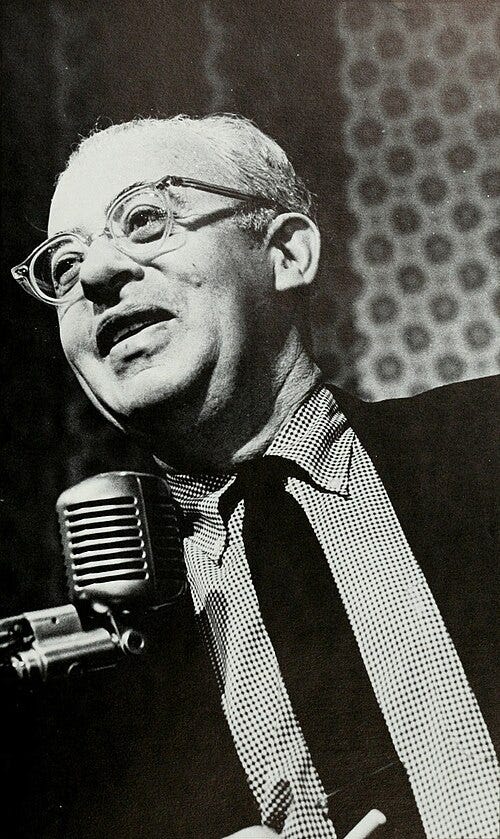
Teaching Power to the Powerless: Saul Alinsky and the Politics of Disruption
He didn’t ask for change. He organized it.
Power Doesn’t Volunteer
Power rarely yields because it’s asked nicely. It protects itself. Expands when it can. Justifies what it takes. In twentieth-century American cities, that reality was obvious to anyone paying attention. Neglected neighborhoods, underfunded schools, communities shut out of decisions that shaped their lives—these weren’t accidents. They were outcomes. The real deficit wasn’t effort or morality. It was leverage.
Saul Alinsky built his life’s work around that gap. He didn’t treat politics as theory. He treated it as conflict—structured by relationships, resources, and pressure. Where others saw powerless communities, he saw unorganized ones. The distinction mattered. Power, in his view, wasn’t granted. It was built.
Chicago as Proof
Alinsky’s ideas weren’t abstract. They were shaped by Chicago—a city where wealth and exclusion operated side by side, each reinforcing the other. At the University of Chicago, he studied sociology and gained a language for what he’d already seen: inequality wasn’t incidental; it was systemic. But analysis wasn’t enough. Description didn’t change outcomes.
What interested him was disruption. He began to treat communities not as subjects of study but as political actors—groups capable of organizing themselves into something institutions couldn’t ignore. That shift—from observation to activation—defined his approach.
Organization as Leverage
In 1940, Alinsky founded the Industrial Areas Foundation, creating a structure to train organizers and test ideas in real communities. His method was deceptively simple: start local, listen first, and build from what people already care about. No imposed agendas. No abstract campaigns disconnected from lived experience.
From there, the strategy sharpened:
● Identify shared grievances
● Build coalitions
● Create pressure
The goal wasn’t awareness. It was leverage. Alinsky rejected the idea that conflict was something to avoid. For him, conflict clarified stakes. It exposed who had power—and who didn’t. Without it, nothing moved.
Agitation With a Purpose
Alinsky’s philosophy reached its widest audience in Rules for Radicals, where he outlined what many critics already suspected: disruption wasn’t a side effect of his work. It was the method. Agitation, in his framework, was strategic. As Alinsky wrote, “Power is not only what you have but what the enemy thinks you have.” It forced institutions to respond. It forced institutions to respond. In Alinsky’s words, “The real action is in the enemy’s reaction.” It created moments that couldn’t be ignored or quietly managed.
But disruption alone wasn’t enough. It had to lead somewhere—negotiation, concessions, tangible change. Better housing. Safer conditions. Representation. Without structure, protest dissipates. Without pressure, negotiation stalls. His work sat in the tension between the two. This is where his critics focused. They accused him of encouraging confrontation, of bending ethics in pursuit of results. He didn’t deny the discomfort. He questioned the alternative. For communities already excluded from polite channels, civility often meant invisibility. Disruption, in that context, wasn’t extremism. It was access.
The Gadfly Problem
Alinsky never fit neatly into ideological categories. Conservatives saw him as destabilizing. Some liberals found him too confrontational. Both reactions missed the point. He wasn’t interested in preserving systems or refining them gently. He was interested in whether they responded to pressure. If they didn’t, he applied more.
That made him a gadfly in the classical sense—persistent, inconvenient, and difficult to ignore. Not because he opposed authority outright, but because he forced it to justify itself under pressure.
His focus stayed practical: what works to shift power? Not what sounds reasonable. Not what feels fair. What works.
What Stuck
Alinsky didn’t invent grassroots activism, but he systematized it. He turned instinct into method—something teachable, repeatable, adaptable. His influence shows up in modern organizing across the political spectrum: local campaigns, tenant unions, community coalitions. Anywhere people try to convert frustration into leverage, his imprint is there.
So are the debates he left behind. How far should disruption go? When does pressure become counterproductive? Can systems be reformed without confrontation—or only through it? Alinsky didn’t resolve those questions. He made them unavoidable.
Power as Practice
Alinsky’s core argument was blunt: participation isn’t enough. Democracy doesn’t function because people are included. It functions when they are organized. He taught communities how to identify their interests, build alliances, and apply pressure where it mattered. Not as theory, but as practice. That’s his legacy.
Power doesn’t yield on its own. But it does respond—to organization, to strategy, to sustained pressure from people who refuse to remain passive within it. Not polite requests. Not distant critique. Action, coordinated and persistent. Everything else is commentary.