

PRELUDE TO MURDER
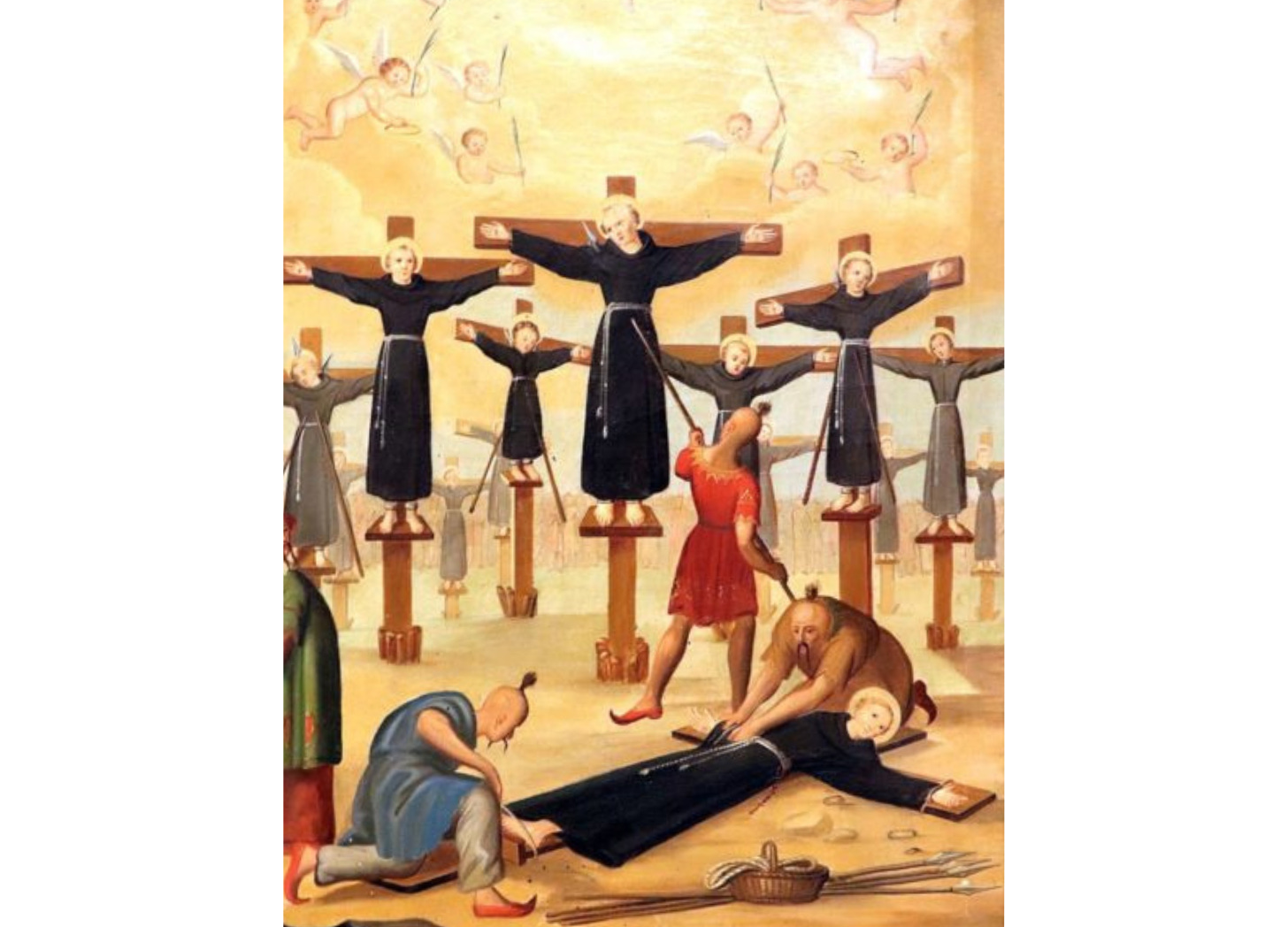
It was an ordinary day on the fifth of February in 1597 in Nagasaki, Japan. Boats went in and out of nearby harbors. Missionaries traveled through the local villages bringing the word of God to native Japanese residents. Everything was copacetic except for one thing: twenty-six people affixed to a nearby hill overlooking the town with lances driven through their bodies. After their crucifixions on this day, they would come to be known as the “26 Martyrs of Japan.” Yet, why were they killed and what legacy did they leave?
Over the half century leading up to this event, immigration numbers from Europe exploded. First from Portugal and then eventually from Spain, large numbers of missionaries traveled to Japan in order to proselytize, several hundred thousand according to some estimates. The Japanese leader at the time, Toyotomi Hideyoshi, initially thought little of this development as he did not consider their evangelism to be a threat. Also, these immigrants opened trade to Europe (the Nanban trade as it was known) as well as to China. However, as the sixteenth century drew to a close, Hideyoshi soon began to sour on these missionaries and set off a campaign against them that lasted many decades. Why the change of heart?
ENEMY WITHIN THE GATES
From the beginning, Japan’s experience with other countries and religions, primarily Buddhism and China, implanted a fear of any foreign source of power emerging within the country. This conspiratorial worry about a disloyal and substantial element—a “Fifth Column”—inside its borders had existed for a long time amongst the Japanese. Now, with rising immigration levels, that threat appeared genuine.
Then, around the time of the seizure of the San Felipe, a wrecked Spanish ship containing a literal fortune, Japanese imperial leadership uncovered some important information. Primarily, Japan discovered from reliable sources that Spain and Portugal were allies and shared a leader. Japan’s leaders had previously assumed that both countries were separate. Then, it learned that it was their standard operating procedure to send in missionaries for conversion prior to sending in military forces for invasion. Where Hideyoshi had previously entertained that said missionaries were harmless and posed no threat, now he saw them as a peril to his nation’s sovereignty, religion, and economy. Thereafter, he took a series of steps to curb their influence.
REMOVING THE REBELS
First, Hideyoshi issued an edict in 1587 ordering all Jesuits in Japan to be immediately expelled. Yet, this edict was not seriously enforced. Hideyoshi himself ignored it in personal practice. There was also no large-scale removal of Jesuit missionaries carried out across the country by imperial forces. Therefore, after a short period of time, many evangelists began to return to proselytizing.
Second, after his initial edict produced little success, Hideyoshi had the important Nanbanji temple destroyed. This marked a turning point in the relationship and one of the first overt and violent acts of aggression towards the foreign missionaries. Some saw this as a specific response to the Jesuits’ growing and public influence in the country manifested in the opulent Franciscan church located in Kyoto. This aggression seemed to be symbolic, though, because Hideyoshi allowed other churches of the same order to remain standing.
Third, Hideyoshi had twenty-six Catholics arrested in January of 1597. Japanese, Spanish, and Portuguese were among those imprisoned, most of them being Franciscan. There were even several children within this group. Then, in February of the same year, Hideyoshi had them tortured, mutilated, and paraded through several towns until finally crucified and martyred with lances on a hill overlooking Nagasaki.
FURTHER OPPRESSION AND LEGACY
Sadly, this did not stop the campaign of terror and violence upon Catholics in Japan. In fact, Japanese leadership committed almost seventy different acts of martyrdom over the next several decades, including killing about fifty-five people in 1622 in an event called the Great Genna Martyrdom. During this time and long after, Catholicism was banned in Japan. This forced Catholics underground and required them to practice their faith in secrecy.
Eventually, Catholicism would return. The martyrs that perished there would stand for eternity with others like them who stood for liberty, such as the Christians at the Colosseum, Saint Joan of Arc in France, and the murdered activists of the Freedom Summer. In the face of ridicule and destruction, they protested, and their words gave birth to ideas and the foundations for liberty that others could enjoy long after their sacrifice.
If you like this, follow me on Bluesky for more musings @chibillyob.bsky.social or on Substack Billy O’Brien